

“The people we love do not disappear. They become part of the way we see the world.”
When I substitute teach a fitness class, I usually introduce myself this way:
“Hello, my name is Karen, and I’ll be teaching your class today. I’ve been a fitness instructor for more than forty years, and I should warn you that I can be annoyingly optimistic.”
People usually laugh.
It is true. I tend to believe things will work out. I look for the good in people, sometimes long after other people have stopped looking. I believe in second chances, fresh starts, and the possibility that tomorrow might surprise us.
My father had a saying:
“Expect the unexpected, and make the best of a bad situation.”
I have carried those words with me for most of my life.
But optimism does not mean a person has escaped sadness. I have had my share of struggle, self-doubt, disappointment, and grief. There have been times when I felt lost, even while appearing perfectly cheerful to everyone around me.
Both things can be true.
You can be grateful for your life and still miss someone terribly. You can laugh in the morning and cry in the afternoon.
You can be an optimist with a broken heart.
I love people. I love talking with them, hearing their stories, and listening. Really listening. I have always been curious about the lives people carry quietly inside them.
But I also love being alone.
When I am walking, swimming, or writing, my mind wanders. I think. I ponder. I remember.
It is during those quiet times that the people I have lost often return to me.
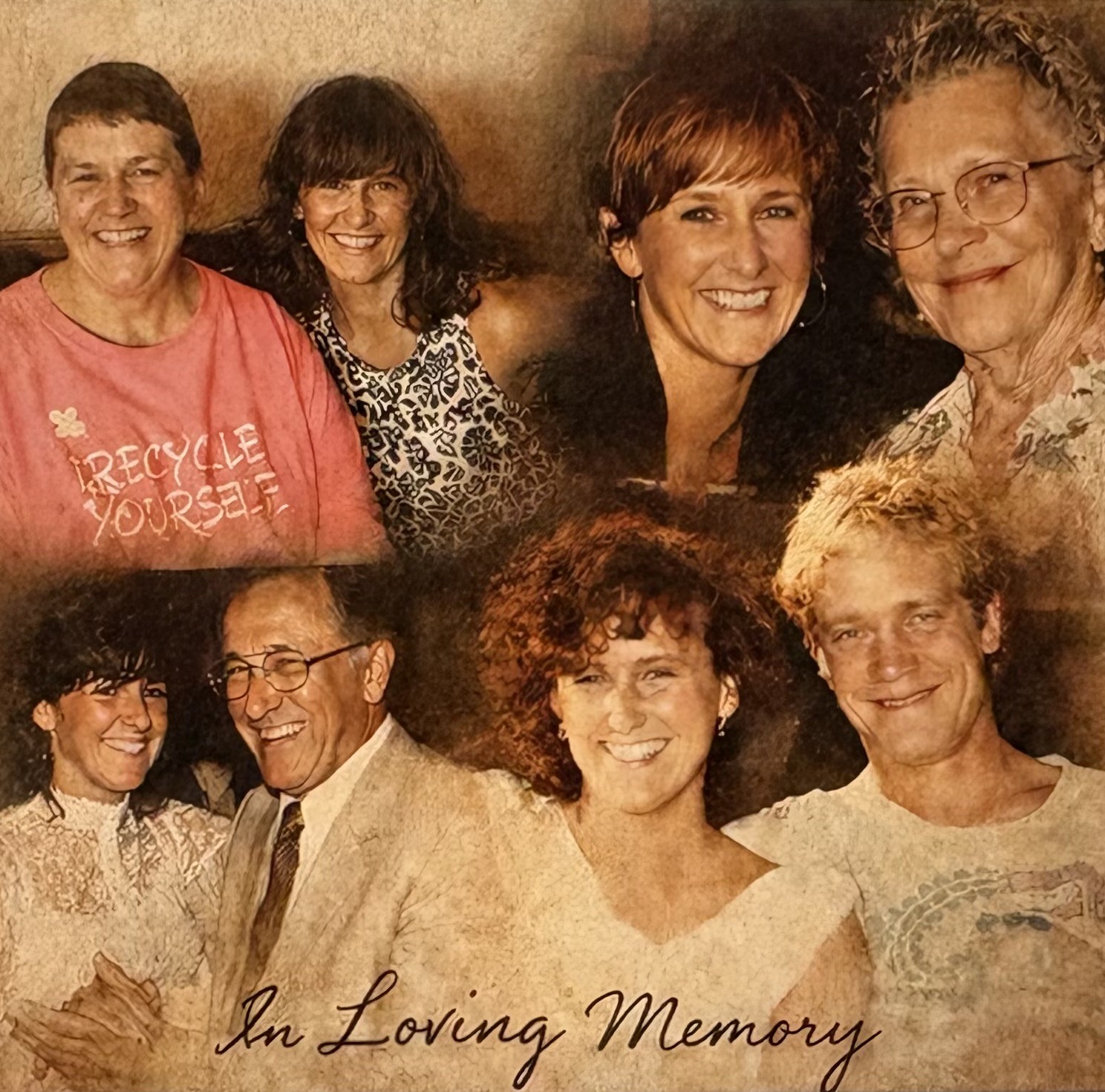
The first anniversary of my sister Linda’s death is approaching on August 13. It also happens to be our father’s birthday.
There is something strange and tender about those two dates now belonging to each other.
It hardly seems possible that an entire year has passed. Some days, it feels as though Linda and I were speaking only yesterday about our long-deceased parents or about her soulmate, whom she had also lost.
Linda understood grief. She knew what it meant to keep living after someone important was gone.
She also understood physical pain. The final year of her life was almost unbearable. Yet even on her deathbed, she told us, “Please cry tears of joy for me, not tears of sorrow.”
That was Linda.
Even then, she was trying to make things easier for everyone else.
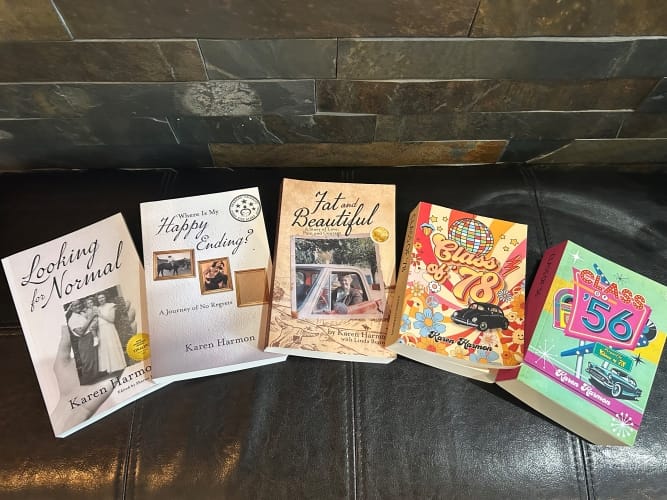
Many of you know that I wrote a book for Linda and about Linda. I had the privilege of putting her life on paper. Together, we revisited her memories, heartaches, mistakes, humour, and the parts of her story she most wanted people to understand.
Writing that book gave us something precious.
Time.
We had conversations we might never have had otherwise. We pulled memories from corners we had nearly forgotten.
Linda once said to me, “I find it remarkable. The more I remember, the more memories appear.”
I loved that. I still do.
There is something about looking back and digging deeply. One memory opens a door, and half a dozen others are standing behind it, waiting their turn.
At the time, I thought I was preserving Linda’s story.
Now I realize she was also leaving something behind for me.
Her voice is still in those pages, but I do not need to open the book to find her. She appears in my thoughts, in the stories I tell, and sometimes in the smallest details of an ordinary day.
When I think about Linda, I also think about the other people I have loved and lost.
I think about Dale, my first husband and the father of Jessica and Emma.
I remember his love of gardening, especially flowers. I cannot hear a Neil Young song without thinking of him.
He was an avid reader. He loved The Hobbit and anything mystical or futuristic. I loved that he loved books.
I have written about him too. About how we met while we were both working along the Alaska Highway. About our immediate connection. About how I fell in love with his family before I fell in love with him.
I have written about our struggles as well, because they are also part of the story. I have always hoped that by writing honestly, someone else might recognize a piece of their own life and feel less alone.
Because none of us are, even when it feels that way.
A person can move forward, love again, and build a new family while still honouring those who helped shape the beginning of the story.
One love does not erase another.
A new chapter does not make the earlier ones less important.
I think about my mom, who will always be kooky and kind in my memory.
She was a 1950s housewife. She cooked, cleaned, and made wonderful food. She also occasionally hired someone to clean and happily used Duncan Hines cake mixes, which seems perfectly sensible to me.
She was a whiz at bridge and, in her own way, a feminist before many people around her used the word. She was witty and loved comedy. Lucille Ball. Carol Burnett. Mary Tyler Moore. Don Knotts. Arthur Fonzarelli.
The Fonz.
One of her favourite things was taking me to afternoon matinees. We had been doing that for as far back as I can remember. There was something special about leaving a bright afternoon behind and disappearing together into a dark theatre.
My mom also struggled with her mental health. For years, I thought of that as something that separated her from other people.
Now, in my sixties, I sometimes find myself thinking: Who doesn’t?
Perhaps we are all simply doing our best with whatever is happening inside us.
Then there was my dad, who I believe gave me my optimism and zest for living. He had the same determination to enjoy the day in front of him.
His laugh was loud and contagious. People in our neighbourhood joked that they could hear him from a block away.
I believe they probably could.
He grew up poor. Very poor. His childhood was sad, and his family was broken in ways a child should never have to understand. But he was determined not to carry that hurt into the home he created.
He told me more than once that when he and my mother married, they promised never to yell at each other or raise their voices around their children.
And they never did.
For years, I wondered whether this had done me a disservice. I grew up cringing when people shouted. Sometimes I froze completely, as though a loud voice could pin me to the floor.
Now I see it differently.
I see the quiet home my parents worked so hard to give us. I see two people making a deliberate choice not to pass their pain forward.
I consider that a blessing.
I have never been someone who yells. I pride myself on being gentle, although I am certainly not perfect. Just ask my family.
But gentleness matters to me.
Perhaps my optimism is not something I created at all. Perhaps my father handed it down to me, along with his loud laugh and his determination to make the best of things.
As it turns out, optimism may be useful for more than getting through a difficult Tuesday.
Researchers from Harvard and Boston University followed nearly 70,000 women and more than 1,400 men. They found that the more optimistic participants tended to live longer and were more likely to reach the age of eighty-five.
Of course, the study did not prove that optimism alone adds years to a person’s life. There are far too many pieces involved in that puzzle. But the connection was strong enough to make me wonder whether my father had been onto something all along.
I am not suggesting we can grin our way out of illness, heartbreak, or a terrible situation. That would be ridiculous.
And, frankly, a little annoying.
Real optimism is not pretending everything is fine.
It is knowing that everything is not fine and believing there may still be something good ahead.
Maybe my father understood that long before anyone studied it.
There are pieces of all of them in me.
Linda is there when I tell a story that deserves to be told.
My mother is there when I do something slightly kooky and then laugh at myself.
My father is there when I decide the glass is still half full.
And Dale is there in our daughters, in a Neil Young song, and in the history we once shared.
The people we lose have a way of appearing in unexpected places. In the face of a child. A familiar expression. A song playing in the grocery store. A recipe written in someone’s handwriting. A joke we suddenly remember and wish we could tell them one more time.
Grief is strange that way.
It does not always arrive dramatically. Sometimes it slips in while we are folding laundry or driving home. We can be having a perfectly ordinary day when a memory appears so clearly that, for a moment, the person feels close again.
I know I am not alone in this. Most of us have wondered how the world can continue so normally when our own has changed completely.
But somehow, we also continue.
Not because we have forgotten, but because living is one of the ways we honour them.
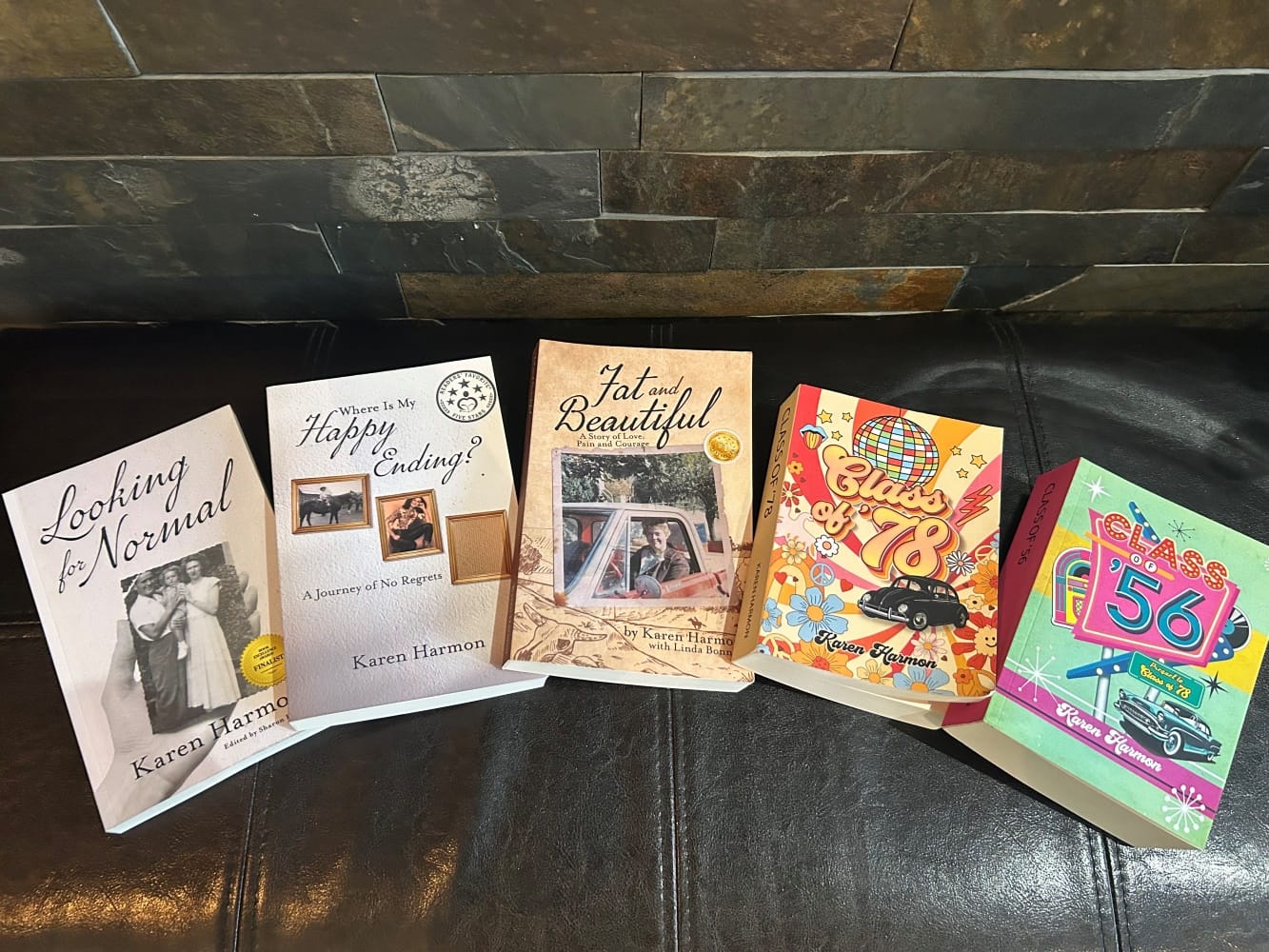
So I go about my days. I teach fitness classes. I swim, walk, write my books, and spend time with my family. I post ridiculous things on Facebook and Instagram, usually in the hope of making someone smile.
The other day, I remembered the little Reader’s Digest magazines my parents received each month. My favourite section was always Laughter Is the Best Medicine.
Even then, I loved the idea that laughter could help us through difficult things.
I still do.
There is something deeply satisfying about putting a smile on another person’s face. Sometimes I think it brings me even more joy than the smile on my own.
All the while, I carry the people I have lost.
Perhaps that is what love becomes after someone dies. Not an ending, exactly, but a quieter kind of companionship. They remain in our humour, our stories, our choices, and the way we care for the people who are still here.
As the anniversary of Linda’s death approaches, I will miss her. I will think about our conversations, the book we created together, and the woman she was: Complicated, funny, strong, and entirely human.
Then I will carry on.
I will teach, swim, walk, write, and laugh whenever laughter comes. I will remain annoyingly optimistic, not because life has spared me from loss, but because it has shown me how precious an ordinary day can be.
So I will notice the sunshine.
I will take the walk.
I will tell the story.
For Linda. For Dale. For my mom and dad.
For all the people I have loved and still carry with me.
As Helen Keller wrote:
“What we once enjoyed and deeply loved we can never lose, for all that we love deeply becomes a part of us.”
Happy birthday, Dad.
And Linda, I hope there are tears of joy wherever you are.
Source: Lee, L. O., et al. “Optimism Is Associated with Exceptional Longevity in Two Epidemiologic Cohorts of Men and Women.” Proceedings of the National Academy of Sciences, 2019.


A touching tribute to the ones you’ve lost.
Thank you so much
I always find it amazing when I come across words sharing thoughts at just the right time as if you’d read my mind. I dearly miss your sister Linda. Every time I go to the chiropractic clinic where we met I think of her and wonder if she likes the changes they’ve made. Or when I see a Handy Dart bus, as I’d often see Linda arriving or leaving in one. As the one year anniversary of her passing approaches I know her smile will be on my mind. I shall also be thinking of you and your family Karen.
Thank you so much Cindy, Linda always spoke very highly of you, she loved you very much. And then you honoured me by reading my books. I am so grateful to know you. Thank you so much for your very kind words. xoxo